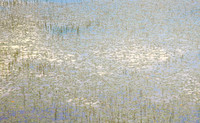
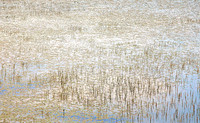
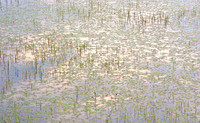
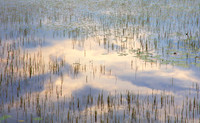
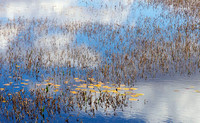
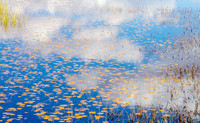
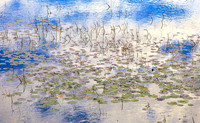
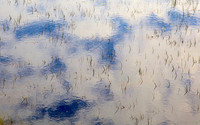
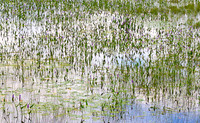
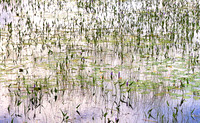
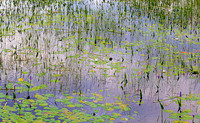
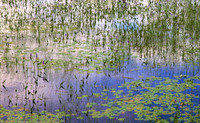
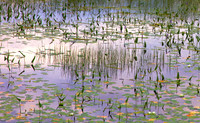
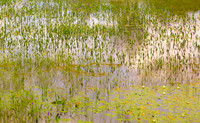
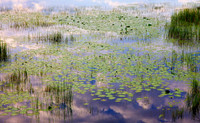
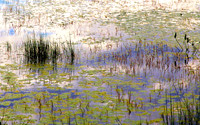
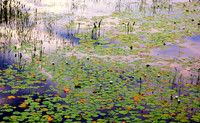
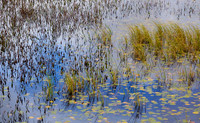
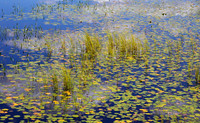
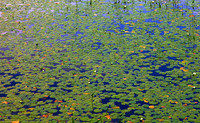
Strolling along the banks of Raquette Pond and admiring the clusters of water lilies and aquatic grasses scattered about in this whimsical water garden, I can’t help but think of Monet strolling alongside his own water lily pond at his home in Giverny. Taking in the always-shifting light, breeze, and water ripples; the always-fluid compositions of water lilies and grasses, I understand why Monet too remained transfixed by his garden pond and chose to spend the last twenty years of his life completing over 250 paintings for his Water Lilies series.
Mindful of the transiency of the scenes before him, Monet painted very quickly, shifting to and from various easels installed all around his pond to capture fleeting perspectives. As I gaze upon similar tableaux offered up by Raquette Pond, I often think that while Monet is rightly regarded as the preeminent impressionist painter, it was Nature herself--through her own reflections on water--that taught him the basics of impressionistic and abstract renderings. Monet has been rightly praised for having captured “the ultimate degree of abstraction and imagination joined to the real,” but it seems clear to me that he took instruction from Nature in order to accomplish this feat. He too must have observed that--by blowing gusts of wind across water’s surface to increase its fluidity and liveliness, or by arranging for water fowl and fish to ruffle the water surface--Nature renders reflected images that are at least as impressionistic and abstract as any painter’s.
Standing before his pond with paintbrush in hand, Monet never tired of pursuing his artistic mission--to be both true to Nature and to his own unique perceptions and impressions. With my camera in hand, I too return to Racquet Pond, again and again--inspired by Monet, and similarly captivated. In my ever-expanding “Monet in the Adirondack” series, I too strive to be true to Nature, as well as to Monet’s ethos and my own impressions of what I behold.